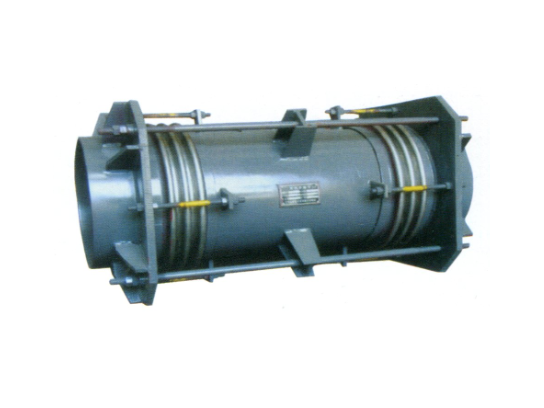
Large tie rod transverse expansion joint
Product Introduction
Large tie rod transverse expansion joint is a key component used to compensate thermal displacement and mechanical displacement in pipeline system. Its structural characteristics and technical performance are as follows:
Product Structure and Composition
Core components
It is composed of two bellows with the same geometric parameters, an intermediate connector, a large tie rod group and an end plate. The corrugated pipe is made of multi-layer thin-walled stainless steel (such as SUS304, SUS316L, etc.), which has high flexibility and corrosion resistance.Tie rod design
The large tie rod is connected with the washer through a spherical nut, which can not only withstand the internal pressure thrust, but also limit the transverse displacement amount and protect the bellows from excessive deformation.
2. Main functions and technical parameters
Compensation capacity
Type of displacement: It mainly compensates lateral displacement, and can also absorb axial, angular and compound displacement.
Compensation amount: The transverse displacement is larger than that of single bellows, and the duplex structure can improve the compensation efficiency and reduce the force.
Technical parameters
Path Range: DN100-DN3000 (special customization available).
Pressure rating: 0.1~2.5MPa, special working conditions can customize higher pressure.
Temperature range: -20℃ ~950℃, suitable for high-temperature flue gas pipeline.
Connection mode: Flange or welding, according to the standard GB/T12777-2008.
APPLICATION SCENARIES AND
Typical applications
industryHigh-temperature and high-pressure pipeline systems such as electric power, metallurgy, chemical industry and cement plant.
Type of pipe: L-shaped, Z-shaped pipes, especially suitable for complex arrangements with limited space.
Performance Benefits
Self-bearing design: The internal pressure thrust is balanced by the pull rod, which reduces the additional external force on the pipeline and reduces the support cost.
Long life: Optimized design with EJMA standard, long fatigue life, high reliability.
IV. Precautions for installation and use
Installation Points
Transportation tie rods need to be removed after pipeline installation, and can not be used as load-bearing parts.
During cold tightening, the cold tightening amount is 1/2 of the actual transverse displacement, and the direction is opposite to the displacement.
During horizontal installation, the spacing between the supports at both ends should be shortened to avoid the bellows from bearing the gravity of the pipeline.
Maintenance recommendations
Avoid mechanical damage or corrosion of the bellows, and regularly check the tightening state of the tie rod nut.
Looking forward to working with you
If you have any questions about our products or services, please feel free to contact us